Showing posts with label verifiable computation. Show all posts

Tuesday, September 6, 2016

Requirements and security goals for the Cloud

This is a two-part blog post giving an overview on the requirements and security goals for the Internet of Things (IoT) and the Cloud.

But first ... I'd like to mention that soon the ECRYPT-NET Summer School on cryptography for the cloud in Leuven is coming up.
This blog post can be seen as an intro to cryptology in the cloud; so there are some topics we will for sure hear about at the event in depth. I'm looking forward to a good discourse during the scheduled talks and to the discussions afterwards.

Part I: Requirements and security goals for the Cloud


The cloud here is loosly defined as computing and storage resources out-sourced to servers located off-site that are on-demand accessible via Internet.
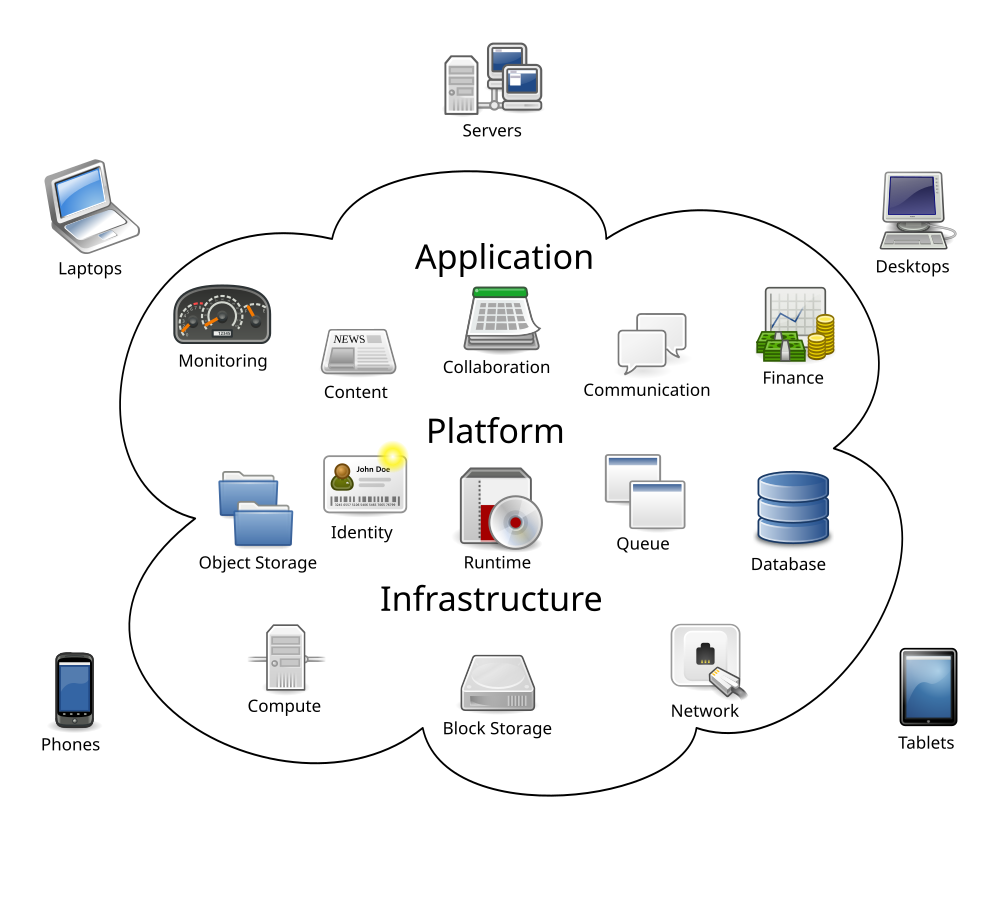
Overview of cloud computing services to be secured
(Image by Wikimedia user Sam Johnston)
The usage of cloud services should thus be viewed as a potential threat, because inherently critical data is released from personal control and uploaded and so immediately raising several security as well privacy issues.

Requirements and the according cryptologic counter-measures are defined for various use-cases (such as depicted in the image) and briefly explained. It is important to realize that this needs to be done without deliberately weakening (or "back-dooring") solutions, as is sometimes suggested. To ensure democratic use of the developed technologies it is vital to see that the difference of a "front door" and a "back door" is merely ones viewpoint. Intentionally implementing two entrances makes an attacker happy not the legitimate user.

Transparent services, meaning the use of the cloud as if it was on-site, should ideally be built upon a back-end with verifiable, clear, possibly standardized, cryptologic concepts and open code for public scrutiny.

To capture the real-world cloud settings one has to view it from different perspectives: First the one of a private entity (user), then that of an organization (such as a company) and lastly the global perspectives of, say, a government.

An interesting starting-point for threats we have to consider, is the Cloud Security Alliance's 2016 report for cloud security naming twelve critical issues ranked by severity of real-world impact.

Data breaches is followed directly by weak identity, credential and access management and insecure Application Programming Interfaces (APIs) in this report --- issues that can be addressed by assessing requirements and tailoring cryptographic solutions from the beginning and deploying state-of-the-art implementations instead of sticking to legacy code.


Roughly four categories of requirements for the usages of the cloud can be distinguished:
  • Computations in the Cloud
  • Sharing Data in the Cloud
  • Information Retrieval from the Cloud
  • Privacy Preservation in the Cloud
The approach to secure these areas are manifold. General speaking, while data minimization is a fundamental paradigm for efficient interaction with the cloud security-by-design --- considering best-practices from the beginning --- is enabled by encapsulation of scopes of methods.
The following, briefly explained, concepts tackle concrete use-cases for end-users, companies and e-Government tasks alike:
  • Order-Preserving Encryption (OPE) allows efficient range queries but does it diminish security too much?
  • Format-Preserving Encryption (FPE) offers in-place encryptions in legacy databases.
  • Data De-Duplication (DDD) is enhancing servers' back-end performance.
  • Secret Sharing Schemes (SSS) is solving back-up and availability issues by distributing encrypted parts of the whole.
  • Malleable Signature Schemes (MSS) is providing flexible authentication for documents and derived data.
  • Private Information Retrieval (PIR) privately accessing elements in a database.
  • Provable Data Possession (PDP) ensures that the cloud is storing the (uncorrupted) files.
  • Multi-Party Computation (MPC) allows secure cooperation across the Internet.
  • Verifiable Computation (VC) builds trust in results of a delegated computation.
We can observe that the cryptology community is striving for efficient cryptographic primitives that serve as building-blocks for implementations. Naturally researchers base their constructions on well-established security assumptions and derive clear security proofs to offer i.e. long-term confidentiality. This is not at least important because of the emergence of future quantum computers with powerful quantum algorithms posing a threat and needs to be addressed today before the transition of current solutions to the cloud, where the constructions would be exposed and would possibly be vulnerable to a quantum attacker.

Let's hope this trend continues and ultimately leads to reliable, standardized primitives for real-world applications.


Stay tuned for Part II: Requirements and security goals for the IoT...

Sunday, January 17, 2016

Sixth Bar-Ilan University Winter School on Cryptography (Part 1)

This two-part blog post has been collaboratively written by Eduardo, Marie-Sarah, Matthias and Ralph.

Earlier this month, from 4-7 January, a few ECRYPT-NET fellows and about a hundred others attended the Bar-Ilan University winter school on cryptography. It took place in Ramat Gan, a suburb of Tel Aviv, at the Kfar Maccabiah hotel and conference centre (named after the Maccabiah, or Jewish Olympics, that take place there every four years). The school was intense, but well organized. It was split into two parts, verifiable computation and special encryption, and so will be our coverage of it.


Part 1: Verifiable Computation


Michael Walfish, Yael Tauman Kalai, and Eran Tromer guided us through methods for verifying the outsourced computation of functions. We particularly appreciated the crystal-clear overview of all sessions, given by Michael Walfish, that emphasized how the content of the talks fit together.

Let's set the scene for verifiable computation: a client (the verifier) wants to outsource the computation of a function f to a server (the prover) who has more computing resources. But how does the verifier know that the value returned by the prover is actually the result of applying the function f to the purported inputs? A malicious or a lazy server could indeed modify the process to gain some advantages as, for instance, reducing the cost of operating a system.

Verifiable computation of f(x) comprises the following two phases:
  1. Program representation (or arithmetization): The verifier (or a party he trusts) expresses the function f as a set of arithmetic constraints over a field, in terms of the input x, output y, and intermediate variables z. Each of these x, y, and z may be vectors, e.g., x=(x1,x2,x3). Typically, the format these constraints needs to have is that of degree-2 polynomials that equal 0 when they (and the function f) are satisfied.
  2. Solving and proving: The server must prove to the client that the solution it returns, y, is correct. The landscape of proof protocols shows a trade-off between efficiency, expressiveness and additional properties like zero-knowledge or non-interactivity. The speaker himself recently wrote a survey which is a very nice introduction to the state of the art and these trade-offs.

Yael Kalai's talks took a more theoretical approach, guiding us through the evolution of Probabillistically Checkable Proofs (PCPs). She emphasized the importance of "good" security assumptions, where "good" requires at least, and according to her point of view, that the underlying assumptions can be efficiently falsified. These theoretical worries were well founded, as most of today's verifiable computation protocols rely on SNARKs (standing for Succint Non-interactive ARguments of Knowledge) which cannot be proved secure via black-box reductions from (efficiently) falsifiable assumptions. 

Yael's talks provided also very interesting and intuitive examples. To give one, suppose that Peggy and Victor are playing chess. After a number of moves, Peggy (the prover) wants to prove to Victor (the verifier) that she has a checkmate. If Victor fails to see it, it is for Peggy easier to convince him by continuing the game (an interactive proof) until he does, rather than to explain all the possible combinations of moves without moving any piece (a non-interactive proof). This intuition of the power of interaction extends to the rest of the proof systems. Finally, she even showed us how the subject fits in the quantum framework, introducing us to the notion of non-signalling adversaries.

Eran Tromer recovered the line of Michael Walfish and focused on the details of SNARKs and how they are actually constructed. Among others, he has been writing libsnark, a C++ library that is used a lot for verifiable computation systems relying on SNARKs. He also showed us a potential application for them, called Zerocash. Zerocash is a protocol that provides a privacy-preserving version of Bitcoin. In contrast to Bitcoin, where all the transactions are public in the block chain, Zerocash does not contain information about the payment’s origin, destination or amount. The correctness of the transaction is guaranteed via a zero-knowledge proof. More details can be found here.


Part 1.5: Excursion to Caesarea and Binyamina Winery

Sun starting to go down in Caesarea.

Tuesday afternoon, we made an excursion to the remains of Caesarea, a Roman city on the Mediterranean coast that was built by Herod over 2000 years ago. To say that it had a tumultuous history would be an understatement. Our tour included a walk through a "graveyard" of columns and capitals, the amphitheatre (whose first row is still intact), and the hippodrome.

Next, we took an informative tour of the Binyamina winery. We learned that grapes are crushed with a flexible rubber material to simulate the skin of feet. For red wine, the grapes are fermented (skin, seeds, and all) before being crushed. For white wine, seeds and skin are removed (by sedimentation) after pressing, then fermented. The tannin (bitter-tasting substances) in wine comes from the seeds, skin, and maybe the material of the barrel in which it is matured. Whether wine is aged or matured in an American oak (sweeter) or French oak (more tannins, adds more complex flavours) barrel affects the final product. Tannins prevent oxidation, so red wine (with more tannins) can be matured longer. Stopping fermentation early makes wine more sweet.

After learning how wine is made, we concluded the day by learning how it tastes (using our five senses!) and enjoying a generous dinner.

Stay tuned for the second and last part of the post!